
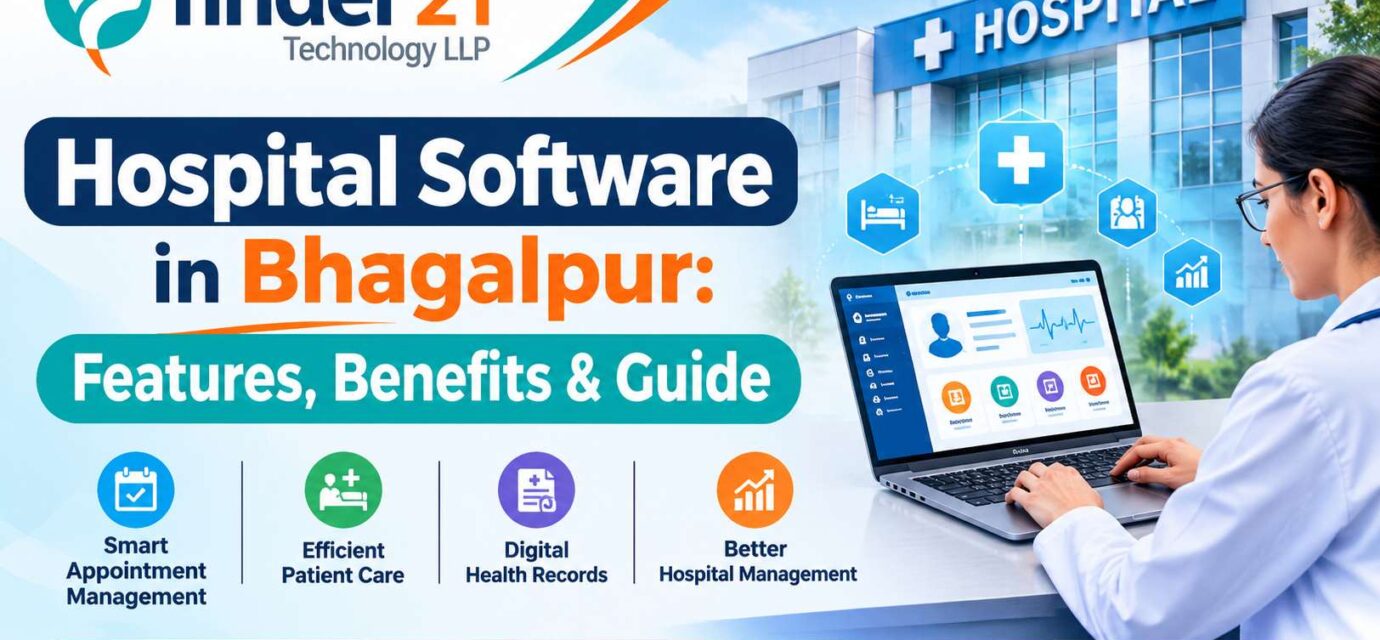












Hospital Software in Bhagalpur helps hospitals, clinics, and healthcare centers organize daily operations with greater clarity. Discover how hospital management software can simplify patient registration, appointment scheduling, medical records, billing, pharmacy management, and administrative reporting. This guide explores essential features, practical benefits, and important factors to consider before choosing a healthcare software solution. Learn how digital systems can support better record organization, smoother departmental coordination, and more efficient administrative workflows. Whether you manage a small clinic, nursing home, diagnostic center, or multispecialty hospital, selecting suitable software starts with understanding your facility’s specific requirements. Explore tips for evaluating usability, data security, customization, staff training, technical support, and long-term costs. Finder21 Technology LLP is featured as a company to consider when exploring digital healthcare management options. Understand the available possibilities and make informed decisions about Hospital Software in Bhagalpur to support organized operations and meet your healthcare facility’s evolving management needs.
Ready to Grow Your Business?
Get expert digital marketing guidance from Finder21 Technology. Enquire now!
Enquire on WhatsAppWhat Is Hospital Management Software?
Hospital management software is a digital system designed to help healthcare facilities manage administrative and operational activities from a centralized platform. Depending on its features, the software may support patient registration, appointment scheduling, billing, medical records, pharmacy operations, laboratory coordination, and reporting.
Consider a patient visiting a hospital for a consultation. The facility may need to register the patient, schedule an appointment, record relevant medical information, prepare a bill, and arrange a follow-up visit. When these activities are handled through connected digital workflows, staff can manage information more consistently.
A suitable hospital management system can help healthcare providers:
- Organize patient registration and demographic information.
- Maintain accessible medical records.
- Coordinate appointments and consultations.
- Manage billing and payment records.
- Track medicines and medical supplies.
- Support laboratory and diagnostic workflows.
- Generate operational reports.
- Improve coordination between departments.
The exact capabilities depend on the selected software and its configuration. Hospitals should therefore evaluate features according to their workflows rather than assume every system provides the same functions.
Why Do Healthcare Facilities in Bhagalpur Need Digital Management Solutions?
Every healthcare facility has its own operational challenges. A small clinic may need a simple appointment and billing system, while a larger hospital may require coordinated management across several departments.
When information is scattered across registers, spreadsheets, and separate applications, employees may need additional time to locate records or update information. Manual processes can also make it harder to maintain consistent documentation.
Adopting Hospital Software in Bhagalpur can help healthcare organizations approach these responsibilities in a more organized way.
Better Organization of Patient Information
Digital records can make relevant patient information easier for authorized staff to retrieve. Properly configured access controls also help limit access to sensitive information according to staff responsibilities.
Smoother Appointment Management
A structured appointment system can help reception teams organize schedules, record bookings, and manage changes more efficiently.
More Consistent Billing Records
Digital billing tools can help maintain service charges, invoices, payment entries, and outstanding balances in an organized format.
Improved Departmental Coordination
When compatible functions work together, staff can coordinate administrative tasks without repeatedly entering or searching for the same information.
More Useful Operational Reporting
Reports can help administrators review activity such as appointment volumes, billing records, and resource usage, depending on the information captured by the system.
Digitalization does not automatically solve every operational problem. Its value depends on appropriate implementation, accurate information, staff training, and regular system maintenance.
Essential Features to Look for in Hospital Software
Before choosing a system, hospital administrators should identify the functions that will make a practical difference to their daily work.
1. Patient Registration and Management
Patient registration is often the first administrative interaction during a hospital visit. Software with suitable registration features can help maintain patient details, assign identifiers, and organize visit-related information.
A clear registration process can also reduce the inconvenience of searching through multiple paper files.
2. Appointment and Doctor Scheduling
Appointment management features can help organize consultation timings, doctor availability, booking details, and schedule changes.
For busy clinics and hospitals, a well-organized scheduling process can make it easier for staff to coordinate patient visits.
3. Electronic Medical Records
Electronic medical records can store relevant clinical information in digital form, subject to the system’s capabilities and applicable privacy requirements.
Authorized healthcare professionals may be able to review documented medical history, consultation notes, prescriptions, and other supported records without relying entirely on physical files.
4. Hospital Billing Software
Billing functionality can help organize invoices, service charges, payment entries, and financial records.
A hospital billing system should fit the facility’s pricing structure and reporting requirements. Administrators should also check whether it supports the necessary payment workflows and accounting integrations.
5. Pharmacy and Inventory Management
Hospitals and clinics that manage medicines or medical supplies may benefit from inventory features that track stock levels, product details, and expiry dates where supported.
These functions can help staff review available supplies and identify items that may require replenishment.
6. Laboratory and Diagnostic Management
Facilities with diagnostic services may need tools for test registration, sample tracking, report management, and coordination between laboratories and healthcare professionals.
Hospitals should confirm whether these functions are built into the system or require separate integration.
7. Reporting and Administrative Dashboards
Reporting tools can help administrators review operational information in a structured format. Depending on the available data, reports may cover appointments, revenue, outstanding payments, inventory, or departmental activity.
The most useful reports are those that help decision-makers answer specific operational questions.
Different Types of Hospital Management Software
Not every healthcare organization requires the same combination of digital tools. Understanding the available categories can help decision-makers choose a solution that matches their operational requirements.
Outpatient Department (OPD) Management
OPD software can help manage patient visits, consultation schedules, registration, and related administrative tasks.
Inpatient Department (IPD) Management
IPD management tools can support admission records, room or bed allocation, patient movement, and discharge-related documentation, depending on the system.
Electronic Health Record Systems
Electronic health record systems organize relevant patient health information and may support access across different authorized healthcare services.
Pharmacy Management Systems
These systems focus on medicine records, inventory tracking, dispensing workflows, and other pharmacy-related activities.
Laboratory Information Management
Laboratory systems can help coordinate diagnostic requests, samples, test processing, and reports. The precise functions vary by product.
Billing and Financial Management
Financial modules can help hospitals organize service charges, invoices, payment records, and financial reporting.
Some hospitals may prefer an integrated platform, while others may need separate systems connected through suitable integrations. The right choice depends on the facility’s size, budget, existing technology, and workflow requirements.
How Hospital Software Can Improve Patient Management
Patient management involves several connected steps, from the first appointment to treatment documentation and follow-up care.
A digital system can help organize these steps by keeping supported information available to authorized staff.
For example, a patient arriving for a scheduled consultation may need registration confirmation, a consultation entry, billing information, and a follow-up appointment. A well-configured system can help staff coordinate these administrative tasks through a consistent process.
Potential benefits include:
- Organized patient records: Relevant information can be maintained in a structured digital format.
- Appointment coordination: Staff can review schedules and manage bookings more systematically.
- Accessible documentation: Authorized users can retrieve information according to their permissions.
- Consistent billing workflows: Charges and payment entries can be recorded more systematically.
- Follow-up support: Appointment and reminder functions may help staff coordinate future visits.
- Administrative visibility: Reports can provide a clearer view of routine operational activities.
It is important to distinguish administrative efficiency from clinical outcomes. Hospital software can support information management, but medical decisions and patient care remain the responsibility of qualified healthcare professionals.
How to Choose the Right Hospital Software in Bhagalpur
Selecting software should begin with a clear understanding of the problems the facility wants to solve. A long feature list is not necessarily useful if the system does not fit everyday operations.
Here are some important considerations.
Understand Your Hospital’s Requirements
List the current challenges involving registration, appointments, billing, records, pharmacy operations, or reporting. Prioritize the problems that affect staff most frequently.
Check Ease of Use
The system should be understandable for the employees who will use it daily. A complicated interface may create unnecessary training demands.
Evaluate Data Security and Privacy
Patient information requires careful protection. Review access permissions, authentication, backup arrangements, data handling policies, and relevant legal requirements before selecting a provider.
Review Customization Options
Different facilities follow different administrative processes. Confirm whether the software can accommodate the workflows and reports your organization actually needs.
Ask About Integration
If the hospital already uses laboratory equipment software, accounting tools, or other digital systems, check whether the new platform can integrate with them.
Consider Training and Technical Support
Implementation involves more than installing software. Staff may require training, documentation, troubleshooting assistance, and ongoing maintenance.
Compare Total Cost
Evaluate setup charges, subscriptions, customization, training, integrations, support, and future upgrades. The lowest initial price may not represent the best long-term value.
Test Before Making a Decision
Whenever possible, request a demonstration using realistic workflows. Allow relevant staff members to assess the system before committing to implementation.
Common Hospital Management Challenges Software Can Help Address
Healthcare facilities often encounter administrative difficulties that develop gradually as patient volumes and operational responsibilities increase.
| Common Challenge | How Suitable Software May Help |
| Paper-based record searching | Organizes supported information digitally |
| Appointment confusion | Provides structured scheduling tools |
| Billing inconsistencies | Helps standardize invoices and payment records |
| Disconnected departments | Supports coordination through compatible modules |
| Difficult stock tracking | Organizes inventory information |
| Time-consuming reports | Generates reports from recorded data |
| Repeated data entry | May reduce duplication when workflows are properly integrated |
These improvements are not automatic. Incorrect data, poor implementation, inadequate training, or incompatible systems can limit the benefits of digital management.
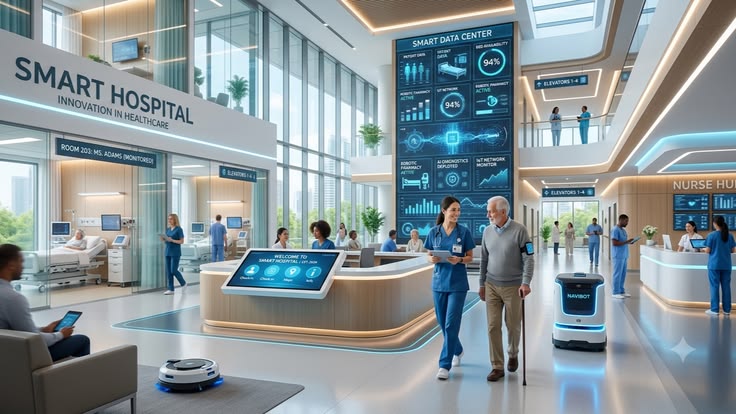
Hospital Software vs. Traditional Manual Management
Both manual and digital processes require accurate information and responsible administration. However, they differ in how records are stored, accessed, and organized.
| Activity | Manual Management | Digital Hospital Management |
| Patient registration | Paper forms and registers | Digital registration tools |
| Record retrieval | Physical file searching | Searchable records, where supported |
| Appointment scheduling | Registers or spreadsheets | Structured scheduling features |
| Billing | Manual calculations and entries | Software-assisted billing |
| Reporting | Manual compilation | Reports generated from recorded data |
| Inventory tracking | Paper stock registers | Digital inventory records |
| Information access | Depends on physical records and staff | Permission-based access, where configured |
For facilities managing a growing volume of information, digital tools may offer a more scalable approach. However, hospitals must still maintain appropriate backups, security measures, staff procedures, and contingency plans.
How Finder21 Technology LLP Fits into Digital Healthcare Management
Finder21 Technology LLP is the company associated with this article’s focus on hospital software solutions. Healthcare organizations exploring digital transformation should begin by identifying their operational needs and evaluating software that aligns with those requirements.
For facilities searching for Hospital Software in Bhagalpur, important priorities may include patient information management, appointment coordination, billing workflows, inventory organization, reporting, and data security.
Before selecting a solution, hospitals should discuss their requirements with the software provider and confirm which features, integrations, implementation services, and support options are actually available.
A thoughtful selection process helps prevent organizations from investing in unnecessary features while overlooking the functions their teams need most.
The objective should be to create a practical digital workflow that supports staff, organizes administrative information, and fits the facility’s long-term plans.
Practical Benefits for Different Healthcare Facilities
The usefulness of hospital software depends on the type of facility and the work it performs.
Small Clinics
Clinics may prioritize patient registration, appointment scheduling, consultation documentation, and billing.
Nursing Homes
Nursing homes may need coordinated patient records, admission information, billing, and inventory management.
Diagnostic Centers
Diagnostic facilities may focus on test registration, report management, billing, and coordination between laboratory staff and referring professionals.
Multispecialty Hospitals
Larger hospitals may require integrated workflows across departments, including OPD, IPD, pharmacy, laboratory, and financial administration.
Specialty Healthcare Centers
Specialty centers may need customized scheduling, patient documentation, and reporting suited to their particular services.
A suitable solution should reflect the facility’s real requirements rather than its size alone.
What Should Hospitals Check Before Implementing Software?
A well-planned implementation can make the transition to digital operations more manageable.
Before introducing a new system, hospital administrators should consider:
- Workflow assessment: Document existing processes and identify areas that need improvement.
- Data migration: Determine how existing patient and administrative records will be transferred and validated.
- Staff training: Prepare employees to use the system confidently and consistently.
- Access management: Assign appropriate permissions based on job responsibilities.
- System integration: Confirm how existing tools and equipment will connect with the new software.
- Backup and recovery: Establish procedures for protecting information and responding to system failures.
- Ongoing evaluation: Review whether the software continues to meet operational requirements after implementation.
Planning these activities in advance can reduce avoidable disruption and help employees adapt to new processes.
Frequently Asked Questions About Hospital Software in Bhagalpur
1. What is Hospital Software in Bhagalpur?
Hospital Software in Bhagalpur refers to hospital management and healthcare software solutions considered by hospitals and clinics operating in Bhagalpur. Depending on the product, these systems may support patient records, appointments, billing, inventory, and reporting.
2. Which features should hospital management software include?
Commonly useful features include patient registration, appointment scheduling, medical records, billing, pharmacy management, laboratory coordination, inventory tracking, and reports. The required features depend on the facility’s services.
3. Can small clinics use hospital management software?
Yes. Small clinics may benefit from selected functions such as registration, appointment management, consultation records, and billing. A solution should be proportionate to the clinic’s needs and budget.
4. How does hospital billing software help administrators?
Hospital billing software can help organize invoices, service charges, payments, and financial records. Its usefulness depends on accurate entries, suitable configuration, and the facility’s billing procedures.
5. Is patient information secure in hospital software?
Security depends on the software’s design, configuration, hosting arrangements, and the practices followed by the healthcare organization. Hospitals should review access controls, encryption, backup procedures, and applicable privacy obligations before implementation.
6. How much does hospital management software cost?
The cost varies according to features, number of users, facility size, deployment model, integrations, customization, training, and ongoing support. Hospitals should request a detailed quotation based on their actual requirements.
7. Can hospital software manage pharmacy and laboratory operations?
Some systems include pharmacy and laboratory modules, while others rely on separate applications or integrations. Hospitals should confirm the availability and suitability of these functions before purchasing.
8. How should a hospital select a software provider?
Hospitals should evaluate functional requirements, ease of use, data security, integration options, implementation support, scalability, references where available, and total cost. A demonstration can help staff determine whether the system suits their daily work.
Building a More Organized Healthcare Future
Digital healthcare management is most useful when technology addresses real operational needs. Better-organized records, structured appointments, consistent billing, and accessible administrative information can help healthcare facilities manage their daily responsibilities more effectively.
For hospitals and clinics exploring Hospital Software in Bhagalpur, the first step is to identify existing challenges and establish clear priorities before comparing available solutions.
Finder21 Technology LLP can be included in the evaluation process by discussing the facility’s requirements and confirming the relevant software capabilities, implementation arrangements, and support options.
Ultimately, successful digitalization is not about adopting the most complicated system. It is about choosing suitable tools, preparing staff, protecting sensitive information, and building dependable workflows that support the people responsible for healthcare every day.
Finder21 Technology
Grow Your Business With Digital Marketing
Call Now: 8851228746 Get Free Consultation