


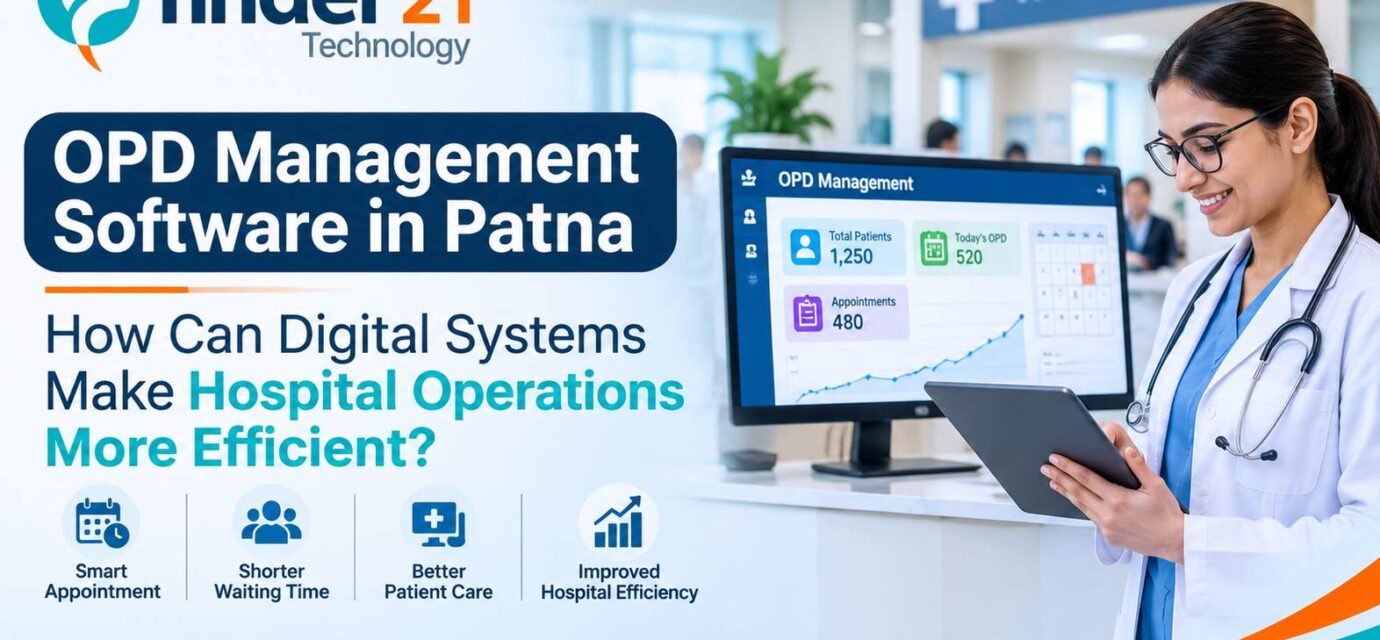







OPD Management Software in Patna | How Can Digital Systems Make Hospital Operations More Efficient?

Discover how OPD Management Software in Patna can help hospitals and clinics simplify patient registration, manage doctor appointments, organize patient queues, and improve everyday administrative operations. Explore the importance of digital OPD solutions, essential software features, and practical ways healthcare providers can create a more organized patient management process. Whether you operate a private clinic, multi-speciality hospital, or growing healthcare center, choosing the right OPD management system can support smoother coordination and better information management. Learn how Finder21 Technology approaches digital transformation and why healthcare organizations should consider smarter technology for managing outpatient departments. Understand the key factors to evaluate before selecting OPD software, including usability, appointment scheduling, digital records, billing coordination, and data security. Make your hospital operations more structured with a technology-focused approach designed around changing healthcare requirements in Patna.
Finder21 Technology
Grow Your Business With Digital Marketing
Call Now: 8851228746 Get Free ConsultationWhat Is OPD Management Software and Why Does It Matter?
OPD Management Software is a digital solution designed to help hospitals and clinics organize outpatient department activities. It supports the administrative processes that take place when patients visit a healthcare facility for consultation, follow-ups, or other medical services.
Traditionally, many OPD departments have depended on paper-based registration, manual appointment records, and separate billing systems. Although these methods may work for smaller operations, managing increasing patient volumes can make coordination more challenging.
A digital OPD system can bring several important activities into a more organized workflow.
Common functions may include:
- Patient registration and information management
- Doctor appointment scheduling
- OPD queue and patient visit management
- Consultation schedule coordination
- Patient record organization
- Billing and payment coordination
- Follow-up appointment management
- Daily OPD activity monitoring
For example, when a patient visits a clinic for a follow-up consultation, organized digital records can help authorized staff locate relevant registration and appointment information more conveniently.
Why Are Hospitals in Patna Exploring Digital OPD Management?
Patient expectations are changing, and healthcare facilities need to manage their operations with greater attention to convenience and coordination.
In Patna, hospitals, private clinics, diagnostic centers, and multi-speciality healthcare facilities serve patients with different medical requirements. Managing these activities requires coordination between reception staff, doctors, administrative teams, and billing departments.
A digital OPD system can support this process in several ways.
Better patient registration: Digital registration can help organize patient information and reduce dependence on handwritten records.
Organized appointment schedules: Staff can maintain doctor availability and appointment details in a structured format.
Improved queue coordination: A planned patient queue can help reception teams manage outpatient visits more systematically.
Easier information access: Properly maintained digital records can make relevant patient information easier for authorized personnel to retrieve.
Administrative convenience: Bringing routine OPD activities into a connected workflow can help reduce scattered record management.
For healthcare providers, the objective is to build an operational process that is easier to manage without making everyday activities unnecessarily complicated.
Which Features Should You Look for in OPD Management Software?
Choosing an OPD management solution requires understanding the actual requirements of a healthcare facility. Not every hospital operates in the same way, so software features should match the size, workflow, and administrative needs of the organization.
Here are some important capabilities worth considering.
Patient Registration Management
Patient registration is usually the first step in an outpatient visit. A digital registration facility can help staff record essential patient information in an organized manner.
Instead of depending entirely on physical registers, healthcare facilities can maintain structured patient details for appropriate administrative use.
Appointment Scheduling
Managing doctor availability and patient appointments can become complicated when multiple doctors operate on different schedules.
An appointment management feature can help reception staff organize consultation timings, maintain booking information, and manage scheduled visits.
OPD Queue Management
Long waiting periods and unclear patient sequences can create inconvenience for both patients and hospital staff.
Queue management functionality can help organize patient visits according to the hospital’s operating process and improve coordination between reception and consultation areas.
Doctor Schedule Management
Hospitals may have several doctors with different consultation hours. A structured scheduling system can help administrative teams maintain appointment availability and coordinate daily OPD activities.
Digital Patient Records
Maintaining patient information in an organized digital format can make record retrieval more convenient for authorized users.
Depending on the software’s capabilities, this may support patient history management, previous visit information, and follow-up coordination.
Billing Coordination
Billing is another important part of outpatient operations. A suitable system may help organize consultation charges, payment information, and related administrative entries.
Reports and OPD Activity Tracking
Administrative teams may need information about daily registrations, appointments, consultations, and other activities.
Reporting features can provide useful operational visibility and support better administrative planning.
How Can OPD Software Improve the Patient Experience?
A patient’s experience begins before meeting the doctor. Registration, appointment confirmation, waiting time, and communication all influence how convenient a hospital visit feels.
When these processes are poorly coordinated, patients may experience unnecessary confusion.
An organized digital OPD workflow can help improve different stages of the visit.
- Registration: Patient information can be entered through a structured process.
- Appointment: Consultation schedules can be maintained more systematically.
- Waiting: Queue information can help staff coordinate patient movement.
- Consultation: Relevant available records can be accessed by authorized healthcare personnel.
- Billing: Administrative payment activities can be organized.
- Follow-up: Previous appointment details can help staff coordinate future visits.
The actual improvement depends on software capabilities, staff training, and how effectively the system is implemented.

Traditional OPD Management vs Digital OPD Management
Hospitals considering digital transformation often want to understand how software-based operations differ from traditional methods.
| Operational Activity | Traditional Approach | Digital OPD Approach |
| Patient Registration | Paper registers and handwritten forms | Structured digital entries |
| Appointment Booking | Manual scheduling | Organized appointment records |
| Patient Queue | Manual coordination | Digital queue management, where supported |
| Patient Information | Physical files | Organized electronic records |
| Doctor Scheduling | Separate schedule registers | Centralized schedule management, where available |
| Billing Records | Manual entries | Digital billing coordination |
| Reporting | Manual calculations | Software-supported reports, where available |
Digital systems do not automatically eliminate every administrative challenge. However, they can provide a more structured foundation for managing routine outpatient activities.
Benefits of OPD Management Software for Different Healthcare Facilities
The requirements of a small clinic may be different from those of a large hospital. A useful OPD solution should support the working requirements of different healthcare environments.
Private Clinics
Private clinics often manage appointments, patient registration, consultation schedules, and follow-up visits with a limited administrative team.
OPD software can help organize these activities and maintain patient information more systematically.
Multi-Speciality Hospitals
Hospitals with multiple departments and doctors need coordination across different consultation schedules.
A suitable digital system can help administrative teams manage appointments and OPD activities within a more structured workflow.
Diagnostic and Medical Centers
Diagnostic centers may need to coordinate patient registration, scheduled visits, and billing-related activities.
Digital record management can support better organization of these routine processes.
Nursing Homes
Nursing homes can explore digital OPD solutions to manage outpatient registrations, consultation appointments, and administrative records.
Growing Healthcare Organizations
As patient numbers and operational responsibilities increase, manual processes may become harder to maintain.
A suitable software solution can provide an organized foundation for managing growing administrative requirements.
What Should Hospitals Consider Before Selecting OPD Software?
Choosing software without understanding operational requirements can create unnecessary complications later. Healthcare administrators should evaluate both present needs and future requirements before making a decision.
Some important considerations include:
1. Understand Your OPD Workflow
Identify how patients currently register, book appointments, meet doctors, and complete billing activities.
2. Evaluate Essential Features
Select functionality according to actual requirements rather than choosing a system simply because it offers numerous features.
3. Check Ease of Use
Receptionists, doctors, and administrative staff should be able to understand the system without unnecessary complexity.
4. Consider Data Security
Patient information requires careful handling. Review access permissions, data protection measures, backup arrangements, and applicable privacy requirements.
5. Understand Customization Requirements
Different healthcare facilities may follow different OPD procedures. Consider whether the software can accommodate relevant workflow requirements.
6. Check Technical Support
Reliable technical assistance and proper implementation guidance can be important when introducing a new digital system.
7. Consider Future Requirements
Choose a solution that aligns with the organization’s expected operational development and integration needs.
Common OPD Management Problems That Hospitals Should Avoid
Even when healthcare facilities adopt digital technology, the implementation process requires proper planning.
Some common operational mistakes include:
Continuing with disconnected records: Maintaining separate information across different systems can create unnecessary administrative work.
Ignoring staff training: Employees should understand how to use the software correctly before it becomes part of everyday operations.
Choosing unnecessary features: A complicated system may make routine work harder instead of simplifying it.
Overlooking patient data protection: Healthcare organizations should establish appropriate access controls and responsible information-handling practices.
Not reviewing operational requirements: Software selection should be based on actual hospital workflows rather than assumptions.
Ignoring ongoing support: Technical assistance and system maintenance should be considered as part of the software selection process.
How Finder21 Technology Can Support Healthcare Digitalization
Healthcare organizations need technology that addresses practical operational requirements rather than simply adding another digital tool to their existing processes.
Finder21 Technology focuses on technology solutions that help businesses and organizations strengthen their digital operations. For healthcare providers exploring OPD Management Software in Patna, understanding workflow requirements, administrative challenges, and the need for organized information management is an important starting point.
Hospitals and clinics can evaluate their requirements around patient registration, appointment coordination, OPD administration, and digital record management before selecting an appropriate software solution.
A thoughtful technology approach should consider how different departments work together and where digital processes can make routine responsibilities more manageable.
For healthcare organizations in Patna, the focus should remain on selecting a solution that supports their operational requirements, offers practical usability, and can accommodate future development.
Practical Ways to Make OPD Operations More Organized
Digital transformation becomes more useful when it addresses everyday challenges faced by healthcare teams.
Here are some practical areas where hospitals can improve their OPD management approach.
Organize Patient Information
Maintain patient registration details through a consistent process so that authorized staff can access relevant information when required.
Coordinate Doctor Availability
Keep consultation schedules updated to help reception teams manage appointments more effectively.
Improve Appointment Planning
Encourage structured appointment management to reduce scheduling confusion and support better coordination.
Establish Clear Administrative Procedures
Ensure that reception, billing, and other administrative teams understand their respective responsibilities.
Review OPD Performance
Regularly examine appointment records, patient registrations, and administrative workflows to identify areas that may need improvement.

Important Factors to Compare Before Choosing an OPD Solution
| Selection Factor | What Healthcare Providers Should Evaluate |
| Registration Management | Patient information entry and organization |
| Appointment Scheduling | Doctor availability and booking coordination |
| Queue Management | Patient sequence and waiting-area coordination |
| Record Management | Digital information access and organization |
| Billing Support | Consultation charges and payment records |
| Data Protection | Security, access control, and privacy |
| User Experience | Ease of use for doctors and staff |
| Technical Assistance | Implementation and ongoing support |
| Scalability | Ability to accommodate changing requirements |
Frequently Asked Questions
What is OPD Management Software in Patna?
OPD Management Software in Patna refers to digital software solutions that help local hospitals, clinics, and healthcare centers organize outpatient activities such as patient registration, appointments, consultation schedules, queue management, and administrative records.
Why do hospitals need OPD Management Software?
Hospitals can use OPD software to organize daily outpatient activities, maintain patient information, coordinate appointments, and support administrative processes through a structured digital workflow.
Can small clinics use OPD Management Software?
Yes. Small clinics can explore OPD solutions according to their requirements, including patient registration, appointment scheduling, consultation management, and record organization.
What are the important features of OPD software?
Important features may include patient registration, appointment booking, queue management, doctor scheduling, digital records, billing coordination, and administrative reporting.
How does OPD software help manage patient appointments?
It can help reception staff maintain appointment details, organize doctor availability, and coordinate scheduled patient visits through a structured system.
Is digital OPD management suitable for multi-speciality hospitals?
Yes. Multi-speciality hospitals can consider OPD management solutions that support their different departments, doctor schedules, patient registration processes, and administrative requirements.
What should I check before selecting OPD Management Software in Patna?
Evaluate essential features, usability, patient data protection, customization possibilities, technical support, implementation requirements, and suitability for your hospital’s workflow.
How can Finder21 Technology help with healthcare technology requirements?
Finder21 Technology works in the technology solutions space. Healthcare organizations can discuss their digital requirements and evaluate suitable technology approaches for organizing their administrative and operational processes.
Building a More Organized Future for Healthcare Operations
Managing an outpatient department requires coordination, accurate information, and a clear administrative process. When patient registrations, appointments, consultation schedules, and records are handled through disconnected methods, everyday responsibilities can become more difficult to manage.
Digital OPD management offers healthcare providers an opportunity to bring these activities into a more structured working environment. The right solution should reflect the actual needs of the hospital, remain convenient for staff, and support responsible handling of patient information.
For hospitals, clinics, and medical centers in Patna, exploring OPD Management Software in Patna can be a practical step towards strengthening administrative coordination and preparing healthcare operations for changing requirements.
With a thoughtful technology strategy and the right software selection, healthcare organizations can work towards making OPD administration more organized, consistent, and convenient for both patients and medical teams.
Finder21 Technology can be considered when exploring technology requirements for more organized digital business and healthcare operations.
Ready to Grow Your Business?
Get expert digital marketing guidance from Finder21 Technology. Enquire now!
Enquire on WhatsApp